



HIF
HIF prolyl-hydroxylases (PHDs/EGLNs) are oxygen-dependent 2-oxoglutarate dioxygenases that function as the principal cellular oxygen sensors by hydroxylating HIF-α subunits and promoting their proteasomal degradation under normoxic conditions[1][2][3]. Mechanistically, decreased oxygen availability suppresses PHD activity, resulting in HIF-α stabilization, nuclear accumulation, and transcriptional activation of genes involved in oxygen homeostasis, metabolism, angiogenesis, and erythropoietic responses[1][2][4][5]. The PHD-HIF axis therefore constitutes a central hypoxia-signaling pathway that coordinates adaptive cellular responses to oxygen limitation and contributes to physiological and pathological processes including cancer, ischemia, tissue repair, and hypoxia-associated diseases[2][4][5][6]. Among the three major isoforms, PHD2 (EGLN1) is widely recognized as the dominant regulator of HIF-1α stability and the key oxygen sensor controlling basal HIF activity, whereas PHD1 and PHD3 display distinct regulatory functions and tissue-specific contributions[7][8][9]. Experimental studies demonstrated that silencing PHD2, but not PHD1 or PHD3, markedly impairs oxygen-dependent HIF-1α degradation, highlighting the unique role of PHD2 in HIF regulation[7]. PHD isoforms also exhibit differential expression patterns and feedback regulation by HIF signaling, supporting nonredundant functions within hypoxia-responsive networks[8][9]. For experimental applications, pharmacological PHD inhibitors stabilize HIF-1α and are widely used to model hypoxic signaling, while selective inhibition of PHD activity provides a practical approach for investigating oxygen sensing, HIF-dependent transcriptional programs, and disease-relevant adaptive responses[10][11].
References:
- [1]. Kaelin WG Jr, et al. Oxygen sensing by metazoans: the central role of the HIF hydroxylase pathway. Mol Cell. 2008;30(4):393-402.
- [2]. Luo Z, et al. Hypoxia signaling in human health and diseases: implications and prospects for therapeutics. Signal Transduct Target Ther. 2022 Jul 7;7(1):218. [Content Brief]
- [3]. Rabinowitz MH. Inhibition of hypoxia-inducible factor prolyl hydroxylase domain oxygen sensors: tricking the body into mounting orchestrated survival and repair responses. J Med Chem. 2013 Dec 12;56(23):9369-402. doi: 10.1021/jm400386j. Epub 2013 Aug 27. PMID: 23977883. et al. Inhibition of hypoxia-inducible factor prolyl hydroxylase domain oxygen sensors: tricking the body into mounting orchestrated survival and repair responses. J Med Chem. 2013 Dec 12;56(23):9369-402. [Content Brief]
- [4]. Yuan X, et al. Targeting hypoxia-inducible factors: therapeutic opportunities and challenges. Nat Rev Drug Discov. 2024 Mar;23(3):175-200. [Content Brief]
- [5]. Chowdhury R, et al. Structural basis for oxygen degradation domain selectivity of the HIF prolyl hydroxylases. Nat Commun. 2016 Aug 26;7:12673. [Content Brief]
- [6]. Gaete D, et al. HIF-Prolyl Hydroxylase Domain Proteins (PHDs) in Cancer-Potential Targets for Anti-Tumor Therapy? Cancers (Basel). 2021 Feb 27;13(5):988. [Content Brief]
- [7]. Berra E, et al. HIF prolyl-hydroxylase 2 is the key oxygen sensor setting low steady-state levels of HIF-1alpha in normoxia. EMBO J. 2003 Aug 15;22(16):4082-90. [Content Brief]
- [8]. Fong GH, et al. Role and regulation of prolyl hydroxylase domain proteins. Cell Death Differ. 2008 Apr;15(4):635-41. [Content Brief]
- [9]. Fujita N, et al. Expression of prolyl hydroxylases (PHDs) is selectively controlled by HIF-1 and HIF-2 proteins in nucleus pulposus cells of the intervertebral disc: distinct roles of PHD2 and PHD3 proteins in controlling HIF-1α activity in hypoxia. J Biol Chem. 2012 May 11;287(20):16975-86. [Content Brief]
- [10]. Lawson H, et al. The selective prolyl hydroxylase inhibitor IOX5 stabilizes HIF-1α and compromises development and progression of acute myeloid leukemia. Nat Cancer. 2024;5:916-937.
- [11]. Singh A, et al. Hypoxia-inducible factor (HIF) prolyl hydroxylase inhibitors induce autophagy and have a protective effect in an in-vitro ischaemia model. Sci Rep. 2020;10:1597.
-
HIF Related Products (12)
Related Products (12)

- 1
-
Deoxyshikonin
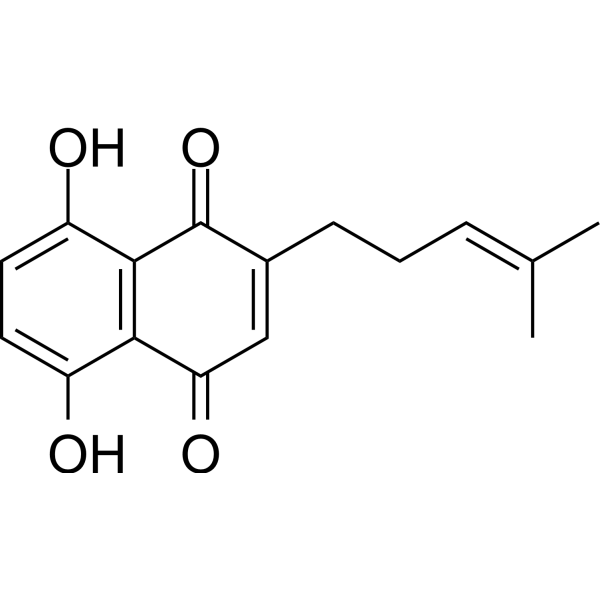 0 ImagesDeoxyshikonin increases the expression of VEGF-C and VEGF-A mRNA in HMVEC-dLy, promotes HIF-1α and HIF-1β subunit interaction and binds to specific DNA sequences targeted by HIF. Deoxyshikonin inhibited colorectal cancer (CRC) through the PI3K/Akt/mTOR pathway. Deoxyshikonin has proangiogenesis effect and antitumor activity. Deoxyshikonin is an antibacterial agent against methicillin-resistant S. aureus (MRSA) and S. pneumonia (MIC=17 μg/mL).
-
Bavachinin
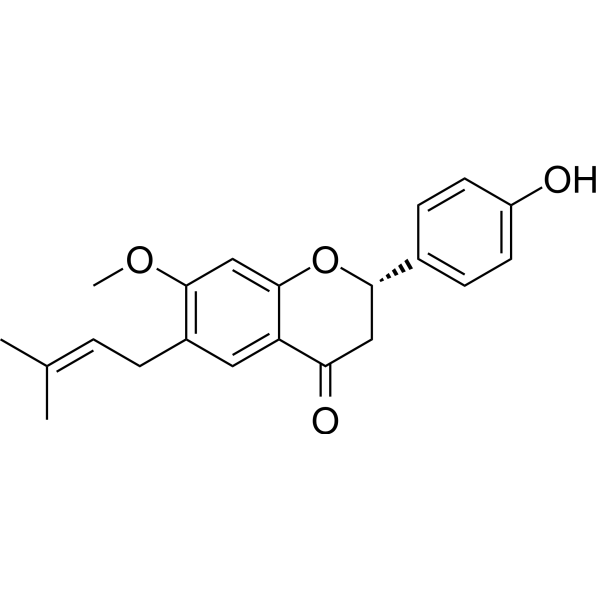 0 ImagesSynonyms: 7-O-Methylbavachin; Bavachinin ABavachinin is agonist of pan-peroxisome proliferator-activated receptor (PPAR), with the IC50 value of 21.043 μM, 12.819 μM, and 0.622 μM to PPAR-α, RRAR-β/δ, and PPAR-γ, respectively. Bavachinin is an inhibitor of HIF-1α. Bavachinin exhibits antitumor activity against non-small cell lung cancer by targeting RRAR-γ. Bavachinin is a natural compound with anti-inflammatory and anti-angiogenic activities. Bavachinin has orally bioactivity..
-
TP0463518
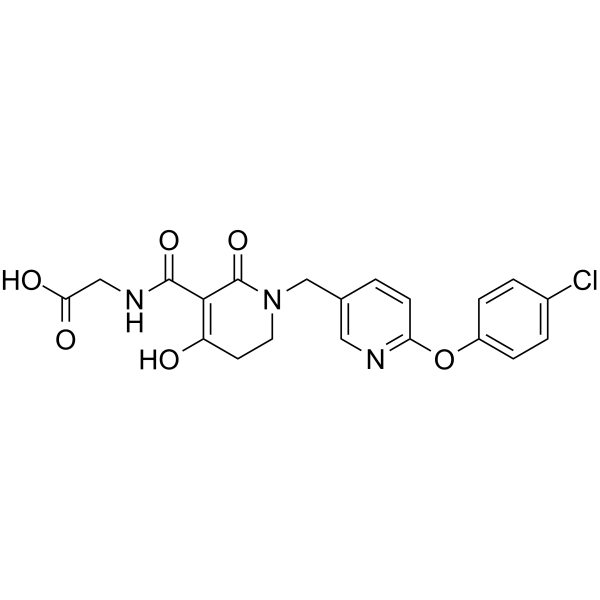 0 ImagesTP0463518 is an orally active, competitive pan-inhibitor of hypoxia-inducible factor prolyl hydroxylases PHD1/2/3. TP0463518 competitively inhibits human PHD1 (IC50=18 nM), PHD2 (Ki=5.3 nM), and PHD3 (IC50=63 nM), and targets monkey PHD2 with an IC50 of 22 nM. TP0463518 inhibits PHD-catalyzed hydroxylation to stabilize HIFα, thereby upregulating erythropoietin (EPO) expression and enhancing intestinal iron absorption (such as increased DMT-1 and dCYTb expression), improving anemia. TP0463518 is mainly used for the research of renal anemia and inflammatory anemia.
-
Izilendustat
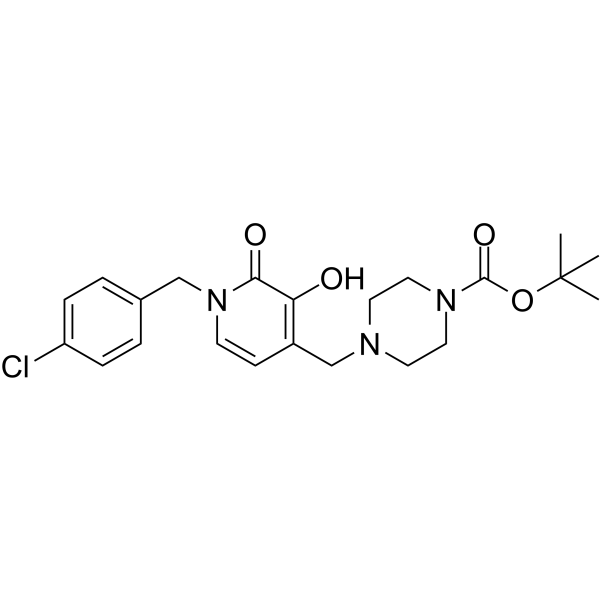 0 ImagesIzilendustat is a potent prolyl hydroxylase inhibitor. Izilendustat competitively inhibits HIFPH2 activity, blocks HIF-1α degradation, stabilizes HIF-1α and HIF-2α proteins, and upregulates downstream target gene expression. Izilendustat can reduce intestinal inflammation and damage, enhance the ability of phagocytes to clear pathogens, and improve ischemia-related pathological phenotypes. Izilendustat can be used for the research of inflammatory bowel disease, ischemic vascular disease and anemia.
-
NEO-811
 0 ImagesCat. No.: HY-183117CAS No.: 3084635-77-5NEO-811 is a selective and orally active ARNT (HIF-1β) molecular glue degrader. NEO-811 is mediated by CRL4-CRBN E3 ligase for ARNT degradation. NEO-811 can be used for the study of clear cell renal cell carcinoma (ccRCC).
-
HIF-2α-IN-18
 0 ImagesCat. No.: HY-183583CAS No.: 2709068-47-1HIF-2α-IN-18 is a selective HIF-2α inhibitor with a human IC50 of 8.1 nM. HIF-2α-IN-18 binds to the HIF-2α PAS-B domain, induces conformational perturbations at the HIF-2α/ARNT dimerization interface, destabilizes the HIF-2α/ARNT heterodimer, and blocks HIF-2α-mediated transcriptional activity. HIF-2α-IN-18 inhibits hypoxia-induced expression of HIF-2α target genes EPO and SERPINE1, without inhibiting HIF-1α target genes PGK1 and PDK1. HIF-2α-IN-18 can be used for the research of clear cell renal cell carcinoma, hepatocellular carcinoma[1].
-
RH01504
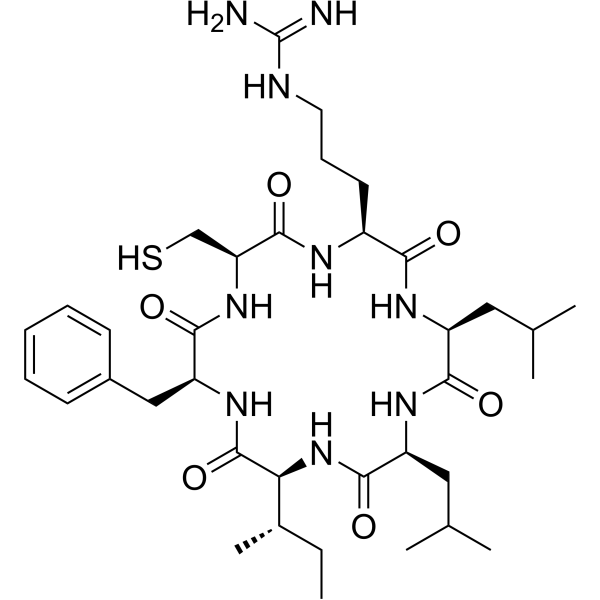
 0 ImagesCat. No.: HY-181270CAS No.: 301335-35-3RH01504 is a HIF2α inhibitor with a Kd value of 5.42 nM against human HIF2α. RH01504 inhibits the growth of renal cancer cells. RH01504 can be used in research related to renal cell carcinoma.
-
PMX464
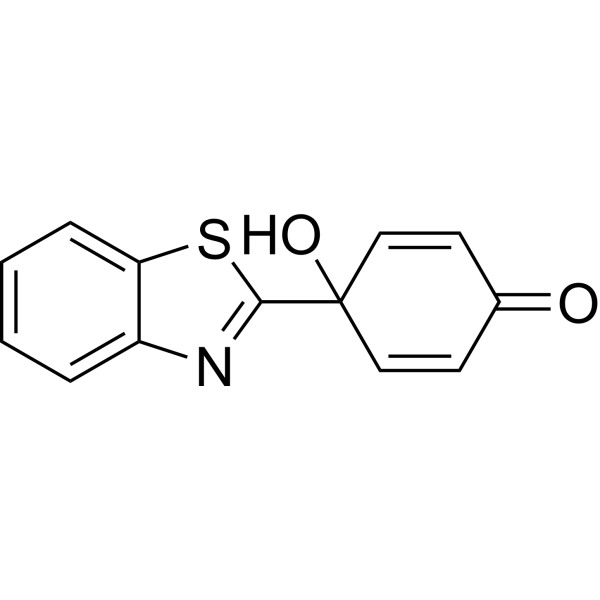 0 ImagesCat. No.: HY-108534CAS No.: 485842-97-5Synonyms: AW 464PMX464 (AW 464) is a thiol-reactive quinol compound and an inhibitor of the thioredoxin-thioredoxin reductase (Trx/TrxR) system, with an IC50 value of 6.5 μM against TrxR. PMX464 acts by irreversibly inhibiting the thioredoxin (Trx-1) system, blocking HIF-1α transcriptional activation and the NF-κB inflammatory pathway, inducing apoptosis, attenuating platelet function and inhibiting thrombosis, and specifically disrupting the trypanothione antioxidant metabolic network in parasites. PMX464 is used in research concerning malignant tumors (colorectal cancer, breast cancer, renal cancer, and leukemia), pulmonary inflammation, African sleeping sickness, and antithrombotic applications.
-
HIF-2α-IN-17
 0 ImagesCat. No.: HY-W470101CAS No.: 861212-49-9HIF-2α-IN-17 is a selective hypoxia-inducible factor 2α (HIF2α) inhibitor that binds to the PAS-B domain of HIF2α. HIF-2α-IN-17 disrupts the interaction between HIF2α and the molecular chaperone Hsp70, leading to proteasomal degradation of HIF2α. HIF-2α-IN-17 exhibits antitumor activity and induces apoptosis in cancer cells. HIF-2α-IN-17 is applicable for research on cancers such as clear cell renal cell carcinoma.
-
ZG-2686
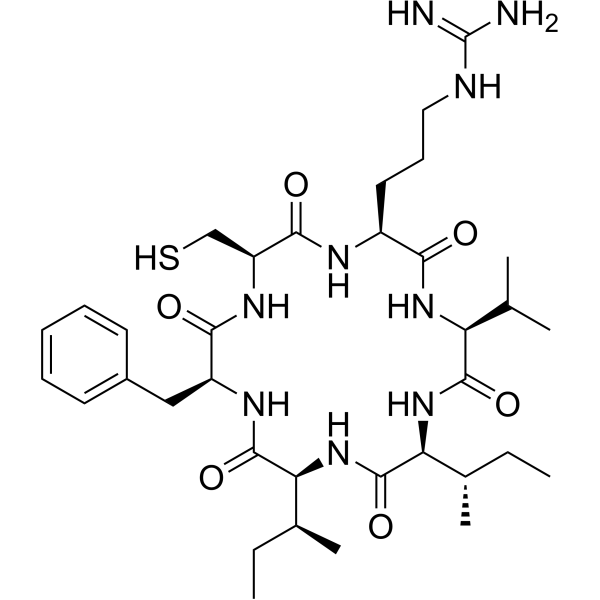
 0 ImagesCat. No.: HY-179647CAS No.: 1795110-22-3ZG-2686 is a potent and selective HIF-2α agonist with an EC50 of 0.25 µM. ZG-2686 exhibits selectivity over PHD2. ZG-2686 binds to a specific internal cavity of HIF-2α, forming hydrogen bonds via structural water molecules, which stabilizes the HIF-2α/β heterodimer and enhances transcriptional activity. ZG-2686 synergizes with Vadadustat (HY-101277) to upregulate HIF-2α-dependent EPO gene expression both in vitro and in vivo. ZG-2686 can be used for the research of renal anemia.
- 1



